
Writer Hernan Diaz on “Ply” and the Limits of Identity
Special | 53m 27sVideo has Closed Captions
Pulitzer Prize-winning writer Hernan Diaz unpacks his new novel "Ply" and why he writes.
In this expansive interview, Hernan Diaz discusses his new novel, "Ply," the institution of language, the beauty of the sentence, post-punk and electronic artists like Cluster and Bill Nace, the texture of this music and how it informs Diaz’ writing, the joyfulness of art-making in a capitalist society, and the ways in which America dreams about itself.
Problems playing video? | Closed Captioning Feedback
Problems playing video? | Closed Captioning Feedback
Support for American Masters is provided by AARP, The Rosalind P. Walter Foundation, Thea Petschek Iervolino Foundation, Burton P. and Judith B. Resnick Foundation, The Philip and Janice Levin Foundation,...
Support provided by:

Writer Hernan Diaz on “Ply” and the Limits of Identity
Special | 53m 27sVideo has Closed Captions
In this expansive interview, Hernan Diaz discusses his new novel, "Ply," the institution of language, the beauty of the sentence, post-punk and electronic artists like Cluster and Bill Nace, the texture of this music and how it informs Diaz’ writing, the joyfulness of art-making in a capitalist society, and the ways in which America dreams about itself.
Problems playing video? | Closed Captioning Feedback
Where to Watch American Masters
American Masters is available to stream on pbs.org and the PBS app.
Buy Now
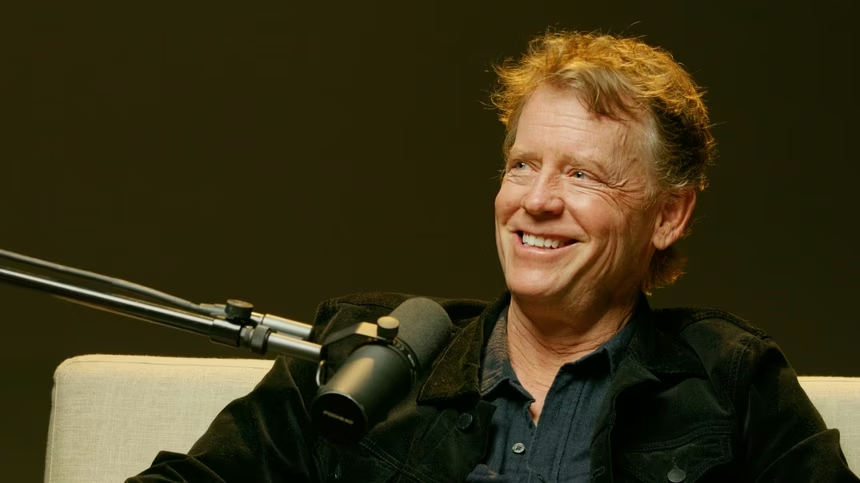
A front row seat to the creative process
How do today’s masters create their art? Each episode an artist reveals how they brought their creative work to life. Hear from artists across disciplines, like comedian Chris Fleming, actor Greg Kinnear, sports journalist Taylor Rooks, and more on our video podcast "American Masters: Creative Spark."Providing Support for PBS.org
Learn Moreabout PBS online sponsorshipMore from This Collection
How do today’s masters create their art? "Creative Spark" presents narrative interviews that go in-depth with an iconic artist about the creation of a single work. Each episode offers a unique window into the world of art and the creative process of artists and cultural icons across a wide range of disciplines, from music and comedy to poetry and film.
Mike Faist Embraces the Unknown
Video has Closed Captions
Actor Mike Faist explores the creative process behind his work on East of Eden. (44m)

The Many Passions of Matteo Lane
Video has Closed Captions
Comedian Matteo Lane on stand-up, painting, singing, performing on Broadway and much more. (55m 8s)
Michael Sarnoski: What Robin Hood and Folklore Tell Us About Ourselves Today
Video has Closed Captions
Filmmaker Michael Sarnoski breaks down his revisionist version of the Robin Hood story. (28m 4s)
Tyler James Williams on 30 Years of Acting and Protecting the Next Generation
Video has Closed Captions
Actor Tyler James Williams talks about his acting process and what drives his work. (35m 23s)
Why Atsuko Okatsuka’s Comedy Connects Across Cultures
Video has Closed Captions
Comedian Atsuko Okatsuka returns to the show to talk about her creative process. (30m)
Greg Kinnear on Acting, AI, and Why Movies Still Matter
Video has Closed Captions
Oscar-nominated actor Greg Kinnear shares some "big thoughts." (27m 33s)
Chris Fleming Embraces the Chaos
Video has Closed Captions
Comedian Chris Fleming talks about the process behind his iconic manic stage persona. (39m 17s)
How Leslie Jones Became a Comedian
Video has Closed Captions
Comedian and actress Leslie Jones does a deep dive on her creative process. (31m)
Phoebe Robinson Shows Her Work
Video has Closed Captions
Comedian Phoebe Robinson takes on hustle-culture in biting comedy special. (31m 45s)
Sarah McLachlan: Making Music to Connect and Heal
Video has Closed Captions
Singer-songwriter Sarah McLachlan opens up in a candid interview about making music. (37m 19s)
How Natasha Rothwell’s Life Brought Her to “The White Lotus”
Video has Closed Captions
Actress Natasha Rothwell on her creative process in "The White Lotus." (33m 40s)
Daniel Dae Kim Leads Spy Drama and Fights for Industry Change
Video has Closed Captions
Actor Daniel Dae Kim on his groundbreaking career and new project, "Butterfly." (21m 48s)
Providing Support for PBS.org
Learn Moreabout PBS online sponsorshipAmerican history welcomes fiction.
It it is eager to tell these tales about itself.
Um some of them are completely horrific and others are liberating, wonderful and and and and and glorious in their egalitarianism, you know, from Wittman on uh both ends of of of the spectrum.
But more than American history, I'm I'm I'm writing more about that, about the ways in which the United States dreams about itself.
This is American Masters Creative Spark, and I'm your host, Joe Skinner.
Our guest is Arnand Diaz, a Pulitzer Prize-winning writer who's back with his third novel.
The book is called Ply, and like his previous works, In the Distance and Trust, he's exploring America as an idea, but this time in a far distant future.
The expansive story covers a lot of ground.
Humanity's relationship to time and selfhood, the DIY music scene in art, friendship and the motheraughter relationship, quantum mechanics, and more.
It's a book that's brimming with ideas.
Thank you so much for coming in.
Thank you.
It's such a pleasure to be here.
So, we're here to talk about ply.
And an idea that I always really love uh is this idea that art is useless.
And I say that only in the sense that it's useless in sort of a capitalist society in a way in that you're putting a lot of input into something sometimes uh without getting the capital gains from it per se.
Uh that's what I love about art.
I love that it feels like something that is inherently subversive in the society that we live in.
And I say this only because that's a feeling I had while I was reading ply.
And I wonder what your thoughts are on that.
Well, we we we do live in a society ruled by universal exchange.
uh and every interpersonal relationship we enter into most of them are mediated by by money and and by instrumental reason they are towards something else hence exchange.
Um I think there are probably two exceptions to this.
Um one is love and I include friendship within that.
uh true love is is is untainted by this and the other one is art.
I understand that art can be a commodity too, of course.
Um, but but the aesthetic experience uh I think is either before or beyond or transcends um those those boundaries.
And I think you're perfectly right in saying that therein lies the subvert the subversive uh quality that that art has in a society that is geared toward um uh exchange and instrumentalization.
um because it it it it refuses to be reduced to to that logic.
It is in a in a in a joyful way pure waste.
It's it's it's a hopefully a waste of time.
Uh and I I defend that.
I stand by that.
Um and I wanted to in in a way thematize that or talk about that in ply.
play is among other things.
It is a novel about art.
Uh I'm sure we'll talk about other aspects of it as well.
Um but it takes place in a future society where we have lost a number of things that we take for granted and that are painful to lose.
We we're witnessing their erosion uh today.
And I think it's just a historical tendency that that will keep devolving in that in that direction.
And again, it will come at at a great human cost.
There is no doubt about it and I'm not romanticizing or aestheticizing that.
However, I think we're also in the process of losing things that are completely worth losing, which have to do with the alienation of our everyday life, the commodification of experience um um uh uh and and again overall uh a sense of deep control which is what defines I think at the end of the day the society we live in.
So, I was trying to depict in a in a in a nonhippy kind of uh flower garland wearing way what a possible glimpse of of a of the birth of a utopia would look like.
And at the core of it, I think is exactly what she said.
It's the liberation of time.
I love the music that is in the book.
Um, I came of age in a time in New York where the underground music scene, the DIY music scene as we called it, was just thriving.
Where are you drawing from for that that part of the book?
I, too, got to experience sort of the last throws of of the '9s in in in New York, which were, I suppose, a pale reflection of the late 70s and 80s, which is the the true golden age of that type of music and culture in New York City.
Um, but I did get my experience living in a in a in a in a loft that was falling apart that was $5 a month and you know the fire department tried to evict us from it every day and um there was very little sleep and the whole building was going on 24/7.
Um um so I was ostensively working on my PhD.
That didn't go so well during during the years I was living there.
So I feel I feel fortunate that I that I got to live that also at the right age you know in my 20s.
Um I I I care deeply about music.
I have written quite extensive extensively about music.
My my my previous book trust has overtly the form of a of a sonata.
It's in it's in four movement movements with the last movement being a kod that picks up the motifs of the previous ones especially the first one.
Um and and and music is a great part of the denimon of the of the book itself.
Right?
There's a there's a quite a bit of musical theory in trust.
Um here I was interested in a different kind of in a different kind of music that has to do more than with punk with the the post punk scene.
uh which I find very interesting because it retains that rawness, that repetitiveness, the loudness, the the aggressivity in in some cases and the and the deliberate ugliness in some cases.
But there is also the presence of other musical traditions that I'm very interested in such as electronic music that was coming into its own during those years and German electronic music very specifically from Stockhousen to to cluster I don't know you name any any kind of composer or band that you can think of uh music concrete as well was there and in America and the United States the tradition of minimalism M influenced greatly this this second wave of of punk music.
So so it it is an amalgamation of musical styles that I find immensely appealing.
I I am also drawn to the fact and this is something that I do quite deliberately in the book that it is an art form that offers a certain degree of resistance.
It doesn't and this harks back to your initial question of universal exchange.
Exchanges ought to be quick, right?
Because you need to move on to the next transaction.
Mhm.
So I am personally interested in in art in any kind of medium that slows down uh that explores a different gear that goes into another kind of velocity that makes you feel the viscosity of the medium that is being explored.
Um and this happens very much both in this music that offers a resistance.
I mean the most obvious one is dissonance, right?
which is something that you want to resolve in your ear and in your brain and that refuses to come.
Another thing is, as I was saying a moment ago, stasis.
This is repetitive music.
I mentioned that, but it also it's also droning music that explores more than um uh evolution, narrative evolution um uh and development.
It's interested in stasis in this in a suspension of of of time, narrative time, musical time.
These are all things that I'm very interested in.
I am also interested in the in the gesture of provocation of of of of presenting these these obstacles in a thoughtful way to to the reader.
I think something is to be gained through that ex I I want them for myself as a as a reader.
Um, and lastly, this this book is also very much concerned with the physicality of space, right?
It there's a lot of talk about what space as a as a physical entity is.
And I think uh that this kind of music that is very loud and again very repetitive and it's something that you experience more perhaps than in your ears and in your brain.
you experience in your on your skin, right?
And last last week I went to see actually in Brooklyn I went to see Kim Gordon and Bill Bill Nace opened for her and there was this beautiful tsunami of noise and I had the experience of being sub submerged in an element that wasn't quite air and I was made to feel very aware of space as something coming into being as space emerging all around me.
And this was possible because of of this music.
And this is what I wanted to write into the book.
I really fell in love with art for the first time with exactly this kind of music.
and you know uh east coast noise music from the '8s, '90s and 2000s and Japan noise music as well from the same era and exactly that feeling of uh visceral qualities while also forced to think about the meta qualities of music and just that combination is something that got me so jazzed on ply while I was reading it.
Oh, that's lovely to hear... footnote, you could think that this experience that in a way suspends intellectual engagement in a way, not in others, but in some way, you could think of it as escapism.
I experience it as the opposite.
I I live it as pure presence as as as being aware of of my body and of my body being part of a larger system that contains, touches, and modifies it, but it's a heightened form of presence.
It's not escapism at all.
It was so fun for me to see this thing I've thought a lot about with music over the years translated into the written form, which is how I perceived much of ply.
This idea of having a text that is operating in kind of opposing ways that's one is immersive and visceral and you can read it as a story, but then the other side of it is intellectual and meta and removed.
And how do you combine those disperate qualities?
I'm I'm very greedy as a both as a as a as a writer and as a reader.
I I want everything out of out of a text.
And I was I was talking a while ago about experiencing the materiality of in this case language of just feeling syntax and and feeling a sense of wonder at the architecture of a sentence and just looking at how subordination works and what is happening with lexical choices and what is going on with tense and how yummy does this word sound next to this other word.
And this is nothing to do with character scene or the diagetic narrative propel propulsive dimension of the text at all.
This is just a sense of awe and wonder and delight hopefully at the the pure matter of the thing.
Right?
You could say all these same things for tone and and and texture and tora and and attack in music, right?
an articulation and it has nothing to do with development.
It's just that it's your body interacting with this this thing with this matter.
Um I love these moments and there and and I feel that they are also highly intellectual in the sense that they demand a certain understanding of the medium that that is that is under consideration, right?
of of of of of having sort of a taste for language in general uh or or or musical language for that matter.
However, I also love love the opposite feeling, the feeling of uh forgetting that I'm holding a book and being instead held by the book.
How how fantastic is to be transported in such a way?
Dickens is for me the the prime example of that where I just look up from the page at this at a certain moment and I'm no longer in the East End of London or whatever and I'm not no longer in the 19th century surrounded by mist.
I'm in I'm in Brooklyn and and I really feel that jolt.
I I I live for those moments.
But I I want both things in in what I write.
And I'm I'm hoping that that I will always retain that freedom for myself of not being married to a certain kind of aesthetic program or dogma according to which I need to pursue one kind of aesthetic effect.
I I I hope to be joyfully promiscuous forever and and pursue these different kind of emotional and intellectual pallets.
Does your process change from book to book?
And how do you go about balancing those two sides of the story in your process?
Everything changes from book to book.
There is no constant.
There is no common denominator.
There is there are no dogmas or manifestos that underly what I what I work.
The the my goal in as a as a writer is to never have a voice.
that that I I don't I don't want one.
Thank you very much.
Um I I I I also think there is there is a bizarre fetish around that which is the fetish of selfhood.
And I and I think we we live very clearly in a in a in a moment in time where where this idea of identity and and and how unique each one of us is is kind of played up to to pathological extents.
Um, if you think about it, we're we're all working with something as writers.
We're all working with something that exceeds us and precedes us and will outlive us over which we have zero control.
And that is the institution of language.
So whatever you do, you do within those parameters that are objective in the sense that they're not subjective.
They don't belong to you in absolutely any way.
um already this puts a major dent in the notion of voice because because you're you're basing it on something that is not yours to begin with.
Um add to that the fact that you're working within a cannon within a tradition that could be as quirky, weird or unexpected as you wish.
Maybe it's your cannon made up by writers that only you and three other people know but still you are being influenced by them.
So I think the notion of voice in itself is polyonic and and stratified and coral and it's to be musical again it's a cluster it's a chord right made up by different well in harmony you would call them voices as well right um so um uh so I reinvent or I invent not re but simply invent a kind of position for each book that that will vary.
I mean hopefully you would never be able to to train a a large language model system to write anything that I write because everything will be different enough and and there would be uh no no possibility of of of doing so.
I hope this doesn't sound arrogant.
I'm just describing what I want to do.
It's and it's it's very much, you know, I I try to keep it new as as as Pound's sort of imperative went, but for myself and and I think I think it's the honest thing to do from for the way in which I look at art.
It it there has to be a certain degree of adventurousness and and risk.
And I'm I'm I'm I am actually kind of very interested in adventure literature.
I think it's an underrated genre.
I think it has to do with uh I think it's a very deep genre because it ultimately has to do with with with death.
That that's what you're trying to escape or the hero is trying to escape constantly.
So it's written with that horizon in mind at all times.
And I think that adventurous spirit, the sense of high stakes, of risk, uh, ought to be on the page.
I think that is that is a great part of what makes something feel alive.
I I know that I feel it when I read something that is written under that kind of pressure as opposed to someone who is an epiggon of themselves and in very concrete terms.
How do you write?
So I knew I wanted to write .. technology in the United States.
I I I don't think we can understand the United States especially after the industrial revolution without thinking about technology.
And it seems that I've been writing about the United States despite, you know, my intentions.
It just happened that way.
And um so I I start started reading a little bit haphazardly, not knowing exactly where this was going.
And I wanted a very clean invention.
I knew it.
I knew there was going to be sort of a let's call it a mad scientist involved, which is a trope that I'm very interested in.
Um, but I I didn't know what the invention was going to be.
I wanted to be able to summarize it in a sentence that I knew.
That was the only it couldn't be baroque or obstruuse or complicated.
So, I went all in on that and I I I read about this world for a number of years.
I want to say maybe three four years and I started when I was editing uh trust so it's it's been going on for a long time and uh uh and eventually I met with with scientists and uh and that's the science part but that's not all of it uh uh I think what started out being a book about science ended up being a book about selfhood and subjectivity and consciousness and the mind and and the possibility of two minds interacting with each other and and and what the difference truly is, if any, between you and me and and I think being immersed in the paradigm of of of particle physics gave me a different approach to that because it's a it's a world where everything is relational.
and and you can't understand any one entity uh separated from from another system.
And I think if you take that seriously, it has an enormous impact on our idea of our own selves.
I mean, it's interesting.
Is this too obscure?
Not at all.
No.
No.
It's interesting that you find your way into writing about America in one way or another.
Um, and to me, if you're writing about America, to write about the idea of selfhood and individualism seems to be part and parcel, right?
It seems to be fundamental to the idea of the idea of America.
What a what a gorgeous question or intervention.
Uh, I I I just want to just leave now because it's perfect like we're done.
Um, yeah, absolutely.
Uh I think the more you study the the history of this country I think such a great part of it is built on the rivalry of the individual against the institutions.
Uh I think that that is that is I'm not saying it's the cornerstone but it's definitely one of the pillars and it is so present and so pervasive in our culture forever you know since since the first people who arrive from Europe on these shores did so because of that very reason because of an an institutional rift.
If you look at the at the myths of this country it's always like that.
It's the it's the it's the pioneer uh going west solo.
It's the vigilante uh going against the law to preserve justice, going against the sheriff, for example.
It is uh the tycoon as well.
It's the selfmade man, right?
That's a very American thing again.
And again, it's about selfhood and individuality.
It is about the the detective uh who again is at odds with the with the institutional law embodied in this case in in in the police in the police force as the representation and embodiment of the state.
It is crucially crucially the superhero who is completely above all of the laws the laws of men but also the laws of nature.
They fly, right?
And for some reason, all of these people from from from from the cowboy and their poncho or their trench coat to um the detective to the superhero, they all have flowing capes.
I some someone needs to figure out why.
Um but but I think this uh this the supremacy of the of the of the of the of the individual and this singing to oneself is is for sure a very American thing.
But I but I but I do also think that we are at a point in history now and and I I talk about this very overtly in the book.
We are in a point of history where the very notion of what it means to be human, the definition of human is in crisis.
And we've been there before like uh over a thousand years ago with with with the advent of the of the Renaissance and later the enlightenment that that drove the whole train of modernity up to this point implied a change in the definition of human.
It put the human at at the center as opposed to God obviously.
Uh humans now were capable of of change of of of evolution both socially and biologically which is a very new idea right.
Um uh the notion of the individual also rooted in its counterpart of private property became very important.
You can't really think of this notion of selfhood without thinking of private property.
Right?
This is I mean not for nothing Hobbs in Leviathan says that this is this is the one principle that kind of precludes the war of all against all.
It's private property.
It's right there.
So I think this idea of selfhood becomes ingrained with with capital with the institutions of modernity as well.
And this is now kind of being broken.
We are in the process of somehow I not that I trust this in any way and we're not going down this road in this conversation I hope but we're in the process of outsourcing our our consciousness.
I mean that's the goal.
I don't think we're there not even close but again fodder for a different moment.
Um our experience of the world is also mediated by technology in ways that it never has.
uh regulated currencies are also kind of on the verge of collapse.
The modern state looks very different, you know, as it did in, you know, after World War II.
It's a short period of time.
Uh but it looks very different.
Uh so, so I think the notion of individuality going back to the the the beginning of of this is also changing and I would even go further.
I think all the other societal changes are coming because our notion of selfhood is changing.
I don't I don't I do not think and I think a lot of sociologists and economists this is a little bit arrogant got it wrong.
I don't think that this that this perception of selfhood is some kind of epiphenomenal froth that is on top of structural material conditions.
I think it's the reverse.
I think the way in which we think of ourselves as humans determine the ways in which we interact with the world.
Yeah.
I mean individuality is so ingrained in my being from as being an American and everything you're taught here that just thinking about a world beyond it is like thinking about after death in a way.
That's right.
Yeah.
It's it's it's it's impossible to look beyond that paradigm because because it's a worlddefining paradigm.
So yeah, it's it feels like something that was I interpreted to be a thrust of why we're looking at how many years in the future imply it feels my what my reading of it was we're seeing a world in which the current policies in our world go to the nth degree and see what happens.
Um, and like you said at the beginning of this conversation, there's an interesting collapse of many things and an interesting rebirth of other things.
And many people assume we're on just like a a linear track of progress and that's how they view humanity or a track towards descent, but people don't often think of things as a cycle.
Yeah.
And ply feels like i.. of a cycle.
Oh, yeah.
I think I think we've all become too enamored with some sort of kind of historical uh teology or esquetology that there is a sense of direction that there is uh you know there is an idea to put it kind of almost in a Hegelian kind of sense that we're moving in we're moving forward we're moving toward the toward that uh um needless to say I don't I don't that's I don't I don't think that that is the case.
Um I think also you know a thing that I've been thinking about a lot while I was writing um ply was literacy for example um uh and which is something that we all take for granted right you this sense of universal literacy and it's and it's a it's a very new phenomenon h how old is it we were talking about Dickens a moment ago there are illiterate characters in Dickens in his in his novels.
Uh my my grandmother my grandmother was illiterate and learned how to read and write poorly late in life.
And so it's it's really it's really a blip, you know, uh this idea that the written word is accessible to everyone.
It wasn't for most of human history.
It is kind of kind of now.
And I don't I don't know if it will keep on being so and and I think this this post literate uh trend will take other shapes.
People will communicate in other kind of um visual forms uh that are not necessarily based on the on the alphabet.
And I think I'm just bringing this up as an example of how things definitely are not linear, but also not necessarily regressive.
I think that's that's another danger.
I think the the the sort of the the fetish of evolution is just as dangerous as to my mind nostalgia.
and to think that the past was always better and that you know we maybe were regressing or um I think history moves uh um uh probably diagonally a lot of times as well you know and and and I think this issue of literacy is is a is a good example of what I'm trying to convey that we to my mind and I say this with with great pain I'm I'm a writer I'm a reader this is my life you know there's no glee in what I'm saying at Um, but it's not that we're going back to the dark ages.
We're we're going to some other place uh uh whose shape is very hard to imagine right now.
But it it will be extremely different and and and weirdly enough, I'm the shapelessness of history makes me hopeful for possibility.
Yeah.
Exactly.
Yeah.
and and freedom.
It feels like the book really cares about freedom.
Yes, it it does.
It's it's it's at the very core of uh of of the novel.
Uh I talked a little bit about freedom for myself as an as an as a writer and and and that I try to it's it's a little weird because I work on a extremely strict constraints that I set for myself for each project.
Um, but I do so freely and and I and I don't I'm not genifing or uh to to any kind of tradition or or literary umpire uh uh or taste or spectral notions of the ideal reader or a public.
No, I I do feel very free as I'm as I'm writing and all of the sort of contextual pressures fade fade away and but but in ply I think in the novel as well.
Uh there is there is the freedom to create which is all important in the plot.
It is very much novel about artists.
Um, and I'm I'm subsuming engineers and and physicists within this category because they're doing it for the love of the thing.
It's not again going back to our very beginning of the conversation, there is nothing in it for anybody other than the hunger of discovery and and the pleasure of the making.
Um, so there is the freedom of art.
There is also this this lovely to my mind u lack of supervision in this in this in this world of ply uh where everyone is free to do what they want and I think the the unintended consequence and I believe this to be true is sort of a decline in in in crime and and uh I I think I think the more supervision and the more punitive a society is the the the more crime there is as well I think that begets the very thing that it's trying to preclude.
Um um so there's there is there is that freedom but then there is also all importantly a sort of sort of an ontological freedom sort of our freedom to to to self-determination.
uh our our freedom to decide, our freedom to to to commit to to forking paths uh to one of the forks in in in those paths.
And I and I think the book is very much about that.
It's it's it's about it's about it's about choice and it's about the branchings of the future and and and our agency when it Yeah.
I mean, what what feels provocative to me about it is kind of wrestling as I'm reading it with this idea of is this future um this stateless future that feels to me like the end goal of a libertarian mindset almost.
Is this actually turning out to be a good thing or a bad thing?
And the impulse to want to know if it's definitively good or bad when in reality it seems like it's it's both.
Yeah.
Um just for the record, I am not a libertarian.
I just I I want that I want that clearly expressed.
I I I do think that that the state is a it's a is a massively flawed institution and there's there's no way it can't be just because of its sheer sheer size and scope and reach.
It it's it's bound to fail.
Um but we'll miss it when it's gone.
I can promise you that.
Another thing that's so interesting about ply to me is going into it in the first 10 20 pages or so I find myself crawling clawing around for is this a dystopic novel?
Is this a utopic novel?
Is this a you know cyberpunk?
Is what is this?
Trying to place a genre on it.
And I appreciated as I kept reading that it kind of for me refused to uh grab on to any of those definitions.
Um, do you have a definition for for where the book is trying to place itself in?
I I I am very grateful to not have a definition.
I think I think definitions are the enemy of of of art of any kind of art.
Um, uh, I I am very interested as a as a as a writer in in genre in in inherited conventions, in the horizon of expectations they create for the writer.
That's what a genre is.
It's a it's a it's a causal system.
Some things are allowed to happen within the world of a fairy tale that are not allowed to happen in the world of crime fiction to give two very obvious examples.
But that's what it is.
It's a it's a causal horizon.
And how delightful is it to set one of those up and then completely destroy it?
I I derive a perverse sense of joy uh by by doing so.
But I I like playing with these common places that that have been hardened uh throughout throughout history.
Uh I think for too long now uh at least for for for a century um science fiction has held a monopoly over the representation of science and technology in literature.
So this is a book that deals to some extent deals with other things too, but to some extent with science and technology, but it's not a science fiction book.
That is a very conscious gesture of of planting little clues that will perhaps lead the reader into believing that this is science fiction novel, but then very clearly it it becomes something that is not quite that at all.
Um, but you mentioned also the word dystopia in in in in your question, and this is a word I take issue with u because I think at some point we've we've lost the ability uh uh to imagine a better future for ourselves.
And I don't mean this this needs to be again a sort of a saccharine version of of of of some kind of utopia.
I'm not I'm not interested in that.
I think that would be a disrespectful thing to write given the times we live in.
Um I I tried to write about the end of a historical period and the beginning of a new one.
And I think the title ply has has many plies has many dimension and has uh uh many many ways in which you can read it.
One of them is that the novel takes place at a historical fold.
We are we are exiting this period that that we're living in now which we can call modernity you know and entering a new thing.
I'm I'm not sure and nobody in this world is sure about what that is.
But uh I think there what I wanted to come through in the novel is that this world is cracked and fissured and broken, but something is hatching through those cracks.
and and and and and this is this is one of my hopes for for for both the book and for ourselves that that despite you know the hardships that that that we're living and that are in store for us and future generations I think I think we're in the process of reinventing ourselves and and and this is this is something that I was hoping would come across in in in ply Fine.
As a writer, just on the craft side of this, how do you wrap your head around uh putting piecing all these different ideas together?
How would you describe that that process for for ply?
Everything that I write begins with reading.
I think that's the most important part of my process is is just reading.
Uh we were talking about selfhood and the inflation of the sense of self that that is so pervasive at least to my mind and I I am I I hope to have the humility and I hope to show it on the page uh to to let everyone know that I understand that you know I I'm I'm I'm just in conversation with a with a long tradition that that pre-exists me and and I find it very suspicious uh when somebody writes as if that didn't exist without engaging in that um in that dialogue with with literary history.
Uh because it's so beautiful literature is is the it's the slowest moving conversation in the world.
But it is a conversation that you you when you when you you know when you when you're reading Virgil you are responding to Virgil.
Um um so uh so again it starts with a ton of reading and reading that is pertinent to the vague vaporous dim project that I have in mind.
It's normally a feeling at this point.
There's no plot.
There's no characters.
And um reading becomes note takingaking.
When I talk about reading, it's not that I it's it's like I wake up and I read all day and and then I fall asleep reading and then I do the same thing next day.
It's all I do.
Like I'm I'm reading it and that's it.
Uh and eventually that that becomes notetaking.
Um, and eventually that becomes maybe little scenes, maybe ideas of who the people in the book will be, but mostly feelings, how I want things to feel.
Um, and this is the thing that I try to preserve at all times in in the book.
And then at some point, the feeling, I mean, and then at some point I I'm I'm off.
I I start writing.
And it's and it's sentence by sentence.
I don't draft.
It's a mystery.
Like I don't understand what that even means.
I don't I don't plot things.
I I don't believe there is a platonic ethereal idea of the novel that is wordless, that is outside of language, that is waiting to be incarnated in some kind of more or less contingent material manifestation.
No, I think literature exists only in language.
So therefore my book exists whatever book that may be as I write it sentence by sentence and these are not placeholders.
Uh I put an an enormous pressure in each sentence and and and I don't move on to the next one until the one that I'm writing isn't kind of more or less okay.
It doesn't mean that it's done.
I'll go back and edit forever.
Conservatively, 75% of my workday when I'm working on a novel is editing the stuff that I already had.
Um, and here comes the the key part to me.
I I am not a spontaneous kind of writer.
I'm not like a stream of consciousness, a free flowing automatic automatic writing surrealist kind of person.
I'm very very much about about control of of of each sentence.
I I I would even go as far as to say I'm not a novelist.
I'm I'm I'm a writer of sentences.
And if I'm lucky, the sentences become a novel.
But what I'm interested in way more than character, plot, anything is the syntactical event, the the the beauty of a sentence.
And is this sentence doing more than one thing at the time?
Is it is it is it maybe even performing what it what it says semantically?
These are the things that are is it is it beautiful?
Is it full of heart?
But here is the job description as I see it for me, for myself, not for others, is that um having this extreme degree of control while preserving the emotional core at at at in the sentence.
That that is the that is the hardest thing for me to make things as as beautiful, precise, lucid, clear and and and sound as possible.
Uh while while also h have them have them brim with with emotion that that is and this happens after each period it begins a new.
What was the emotion that that drove Ply?
For for reasons that are uh unknown to me, uh I I always write about two things.
Um uh that go to they're paired up together.
Uh they are um loneliness, solitude, isolation uh and disorientation which which I feel are are intimately connected.
I think in in utter isolation uh all bearings are lost, right?
Because there's there's no frame of reference.
Um so these are two things that I that I keep coming back to.
And uh they're very explicit in other or more explicit in other books that I' that I've written.
Uh my first published book uh which is called in distance uh is is literally about a character who's alone for the entirety of the novel lost in the in the American West.
He doesn't know where north is.
Um so this is something that I'm drawn to.
Uh I don't want to examine why.
uh you know now after after after having read so much about quantum mechanics I know that observing something inevitably affects it and I I feel that if I I if I look at this too much I will break it.
It needs to be unknown to me why this is a driving force and for me and for my writing and I and I feel that each project is my attempt at at at figuring that out.
You know, it just makes me think about America again because in a country that stresses individualism so much in its DNA, uh that feels like a lonely place to be in certain ways.
And you know, In the Distance, Trust and Ply could be seen as kind of a loose trilogy about America.
Um what keeps bringing you back to wanting to understand or explore America?
Um you know, you have international background.
Yeah.
uh what led you to America as the focus in that way?
Well, um I I am .. I'm I'm I'm a voluntary American.
Uh and I somehow feel that in these dark times, it's more important than ever to stand by by that choice.
I I feel it has a very modest uh very private surely political value just to despite everything keep keep embracing this choice that I've made.
I think it matters to me.
Um, I am also mostly sort of a literary creature like this is what I what I what I do with with my with my life with my days.
I don't have hobbies.
I you know I have a family that's that's the only other thing that I do.
Um and and I became as a as a teenager really I became I fell in love is is the is the correct expression both with the English language in general um and and very specifically with with the with the American cannon.
Uh the the first novel I ever read in English in my early teens with the with the aid of a of an abridged very bad dictionary was um uh the narrative of Arthur Gordon Py from Nucket.
The the only novel that Edgar Alen Poe ever wrote.
That was that was my the first novel I read in in its entirety in English.
And off I went and um and uh and and it changed it changed my life to the point that I moved here, you know.
Uh and um and I you know reading reading Melville, reading Henry James, reading the 19th century cannon, Edith Wharton um uh moving on to the 20th century was was very important uh uh for me.
So I think a moment ago I said that I'm I'm the kind of writer who writes facing tradition and in an overt conversation with with that tradition that the tradition that I'm interested in not necessarily you know uh uh what's in in academic syllabi or in Harold Bloom's western cannon like my own cannon.
Um, so I because I became so invested in my version of the of the American cannon, it shouldn't come as a surprise that I also became invested in the United States because by by addressing what I came to see some of the highly oified and crystallized tropes that have been present throughout um you know the the the decades or centuries in this cannon.
By engaging those tropes, you're also in a mediated fashion engaging the historical conditions that that gave rise to those very tropes.
Right?
So if if if I'm writing about if I'm writing about a character lost in the west in the in the mid-9th century there there is no way around addressing um the political and economic and historical determinations of that world and I I rush toward them.
It's not that I that that there some kind of obstacle that I want to do away with.
I I I embrace I'm I'm eager to to understand them and to and to to the extent of my abilities crack them open.
Um, and I I guess I've become very interested in the mythological dimension uh of of American history.
I think having grown up in in in different countries in different languages and having been exposed uh to different cultures in in a very serious way like living fully in other countries uh in my experience I don't think there is another culture for which fiction has such an plays such an important role than in the United States United the American history welcomes fiction.
It it is eager to tell these tales about itself.
Um some of them are completely horrific and and involve sort of uh again sort of the idea of a of a planetary vigilante and America different versions of American exceptionalisms.
Others are liberating, wonderful and and and and and glorious in their egalitarianism, you know, from Wittman on uh both ends of of of the spectrum, but I I don't I don't think Ecuador or or Belgium are doing things like like this self- mythologizing.
I'm sure they're doing other things, but but the extent to which the United States is eager to um to create these and promote these dreams about about itself, the these these epics, these fantasies to me is is is is a source of wonder and awe.
And and I guess that's more than American history.
I'm I'm I'm writing more about that about the ways in which the United States dreams about itself.
You know, I was trying to think of a good last question, but I think that's just such a beautiful note to end on and I really I do appreciate that.
All right.
I think it does it does end it well.
Yeah.
Thank you so much for coming in.
This was this was really one of the great ones.
Because of you, not because of me.
It's it's uh Yeah.
Thank you guys.
Gl.. That's our show.
A big thank you to Arnand Diaz for taking the time to talk.
American Masters Creative Spark is a production of the WNET Group.
Media made possible by all of you.
This episode was produced by me, Joe Skinner.
Our executive producer is Michael Caner.
Original music is composed by Hannis Brown.
This episode was mixed and mastered by Evan Joseph.
Funding for American Masters Creative Spark is provided by the Rosalyn P. Walter Foundation, the Anderson Family Charitable Fund, the Mark Hos Foundation, Sue and Edgar Wenheim III, the Torina Endowment Fund, the Ambrose Monell Foundation, the Kate W. Cassidy Foundation, the Philip and Janice Leaven Foundation, and by PBS viewers like you.
Thanks.
See you soon.











Support for PBS provided by:
Support for American Masters is provided by AARP, The Rosalind P. Walter Foundation, Thea Petschek Iervolino Foundation, Burton P. and Judith B. Resnick Foundation, The Philip and Janice Levin Foundation,...